
Introduction to Access Control Systems
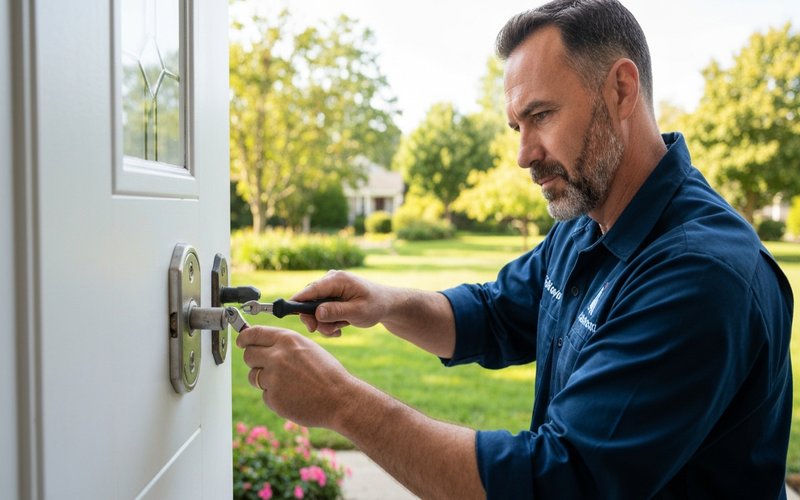
Modern access control isn't just about keeping unauthorized people out—it's about creating flexible, intelligent security ecosystems that enhance operational efficiency, provide detailed access logs, eliminate the costs and vulnerabilities of traditional keys, and scale seamlessly as your organization grows. Whether you're securing a single door or orchestrating a multi-building campus security network, our team brings the expertise and technology to deliver solutions that work.
The Latest in Card Access Control Systems
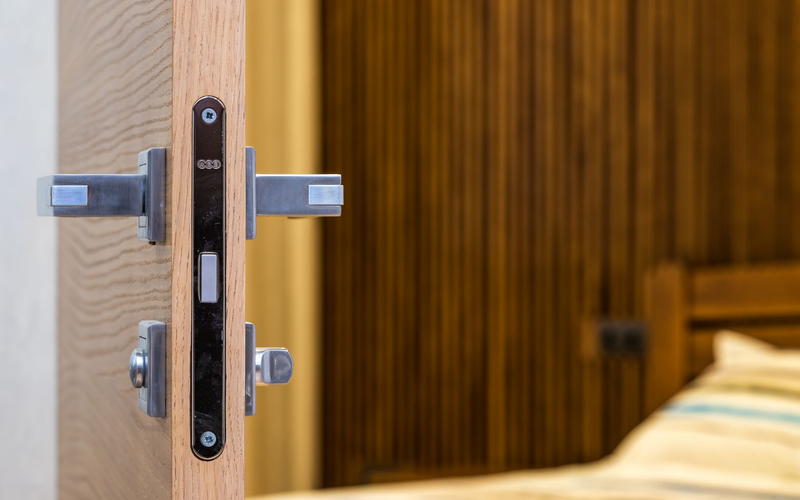
Today's card reader technology has evolved dramatically, offering unprecedented levels of security, convenience, and integration capabilities. At Lombard IL Locksmith, we install state-of-the-art card access control systems that utilize advanced encryption standards and anti-cloning technology to prevent unauthorized duplication and security breaches.

Our key card systems support multiple credential formats including proximity cards, smart cards with embedded chips, and mobile credentials that transform smartphones into access devices. This flexibility allows organizations to choose the authentication method that best balances security requirements with user convenience and budget considerations.
The card reader hardware we install ranges from basic single-door controllers to sophisticated multi-reader panels that manage dozens of access points simultaneously. These systems integrate seamlessly with existing security infrastructure including surveillance cameras, alarm systems, and visitor management platforms to create comprehensive security solutions.
Real-time monitoring capabilities allow security personnel to observe access events as they occur, receive instant alerts for unauthorized access attempts, and remotely lock down facilities during emergency situations. The audit trail functionality provides detailed logs showing exactly who accessed which doors at what times—invaluable information for compliance requirements, incident investigation, and operational analysis.
Enhance Your Security with Cutting-Edge Biometric Fingerprint Access Control Systems
Biometric access control represents the pinnacle of authentication technology, utilizing unique physical characteristics that cannot be lost, stolen, or shared like traditional credentials. Our biometric systems at Lombard IL Locksmith include fingerprint scanners, facial recognition cameras, iris scanners, and multi-factor solutions that combine biometrics with cards or PINs for maximum security.
Fingerprint recognition systems offer exceptional accuracy and speed, authenticating users in less than a second while virtually eliminating false acceptance rates. Modern capacitive and optical sensors can read fingerprints even in challenging conditions, with anti-spoofing technology that detects and rejects fake fingerprint attempts.
Facial recognition technology has advanced significantly, now offering touchless authentication that's become increasingly valued in health-conscious environments. These systems can identify authorized individuals from several feet away, even accounting for changes in appearance like glasses, facial hair, or aging.
Biometric access control proves particularly valuable in high-security environments where credential sharing poses significant risks—each person's biometric signature is unique and non-transferable. Healthcare facilities use biometric systems to protect medication storage areas, research laboratories rely on them to secure intellectual property, and financial institutions deploy them to safeguard sensitive data centers.
The enrollment process is straightforward—authorized users simply register their biometric credentials during a brief setup session, after which they enjoy fast, convenient access without fumbling for cards or remembering codes. Our systems store biometric data in encrypted formats that protect privacy while maintaining security integrity.
Our Access Control Systems Installation Process
At Lombard IL Locksmith, we follow a systematic approach to access control system implementation that ensures optimal performance, reliability, and user satisfaction. Our process begins with a comprehensive security assessment where we visit your 441 S Martha St, Lombard, IL 60148 location or surrounding area facility to evaluate your specific requirements.
During the initial consultation, we document all access points, identify traffic patterns, understand organizational hierarchy and access needs, assess existing infrastructure, and discuss your security objectives and concerns. This information allows us to design a customized solution that addresses your unique situation rather than offering generic, one-size-fits-all packages.
The design phase involves selecting appropriate hardware components including card reader units, electronic locks, control panels, power supplies, and backup systems. We create detailed installation plans showing equipment placement, wiring paths, network connectivity requirements, and integration points with existing systems.
Our certified technicians handle all installation work, ensuring professional mounting of readers and locks, proper wiring that meets code requirements, secure network configuration, thorough system testing, and comprehensive documentation. We coordinate installation timing to minimize disruption to your operations, often working during off-hours when necessary.
After installation, we provide thorough training for administrators and end-users, covering system operation, credential management, report generation, troubleshooting basics, and emergency procedures. We configure the system according to your access policies, enroll initial users, and conduct live testing to verify everything functions as intended.
Types of Access Control Systems We Offer
Lombard IL Locksmith installs a comprehensive range of access control solutions designed to meet diverse security requirements and operational environments. Our fob systems provide convenient, pocket-sized credentials that users simply present to readers for instant access—perfect for organizations wanting durable, cost-effective credentials that resist daily wear and tear.
Key card systems offer versatility in credential formats, from basic proximity cards for standard security needs to smart cards with encryption capabilities for high-security applications. Photo ID cards combine visual identification with electronic access control, serving dual purposes for organizations requiring both functions.
Mobile access control represents the cutting edge of convenience, transforming smartphones into secure credentials through encrypted Bluetooth or NFC technology. Users appreciate the convenience of accessing facilities with devices they already carry, while administrators benefit from remote credential management and instant activation or deactivation capabilities.
Biometric systems include fingerprint readers for fast authentication, facial recognition cameras for touchless entry, iris scanners for maximum security environments, and palm vein readers that offer exceptional accuracy. Multi-factor authentication combines two or more credential types—such as a card reader plus PIN code or biometric plus fob—for situations demanding elevated security.
We also install specialized systems including turnstile integration for controlled pedestrian traffic, elevator control systems that restrict floor access based on credentials, parking gate access control for vehicle entry management, and wireless access control that eliminates complex wiring requirements in historic buildings or temporary installations.
Understanding the Three Types of Access Control
Access control systems operate according to different logical models that determine how access permissions are granted and managed. Understanding these models helps organizations select the approach that best aligns with their security philosophy and operational structure.
Discretionary Access Control (DAC) gives resource owners the authority to determine who can access their areas. This flexible approach works well in small organizations or departments where managers should control access to their own spaces. However, it can become difficult to manage consistently across large organizations.
Mandatory Access Control (MAC) implements rigid, centralized security policies where access decisions are based on security clearance levels and information classification. Government agencies and military installations commonly use MAC systems where access permissions cannot be altered by individual resource owners, ensuring consistent security policy enforcement.
Role-Based Access Control (RBAC) grants permissions based on organizational roles rather than individual identities. Employees receive access rights appropriate to their job functions—accountants access financial systems, engineers access development areas, and managers access administrative zones. This approach simplifies administration in organizations with defined roles and reduces errors associated with individual permission management.
Most modern implementations at our 441 S Martha St, Lombard, IL 60148 location and throughout Lombard combine elements of these models, creating hybrid systems that balance security requirements with operational flexibility and administrative efficiency.
The Seven Main Categories of Access Control
Comprehensive access control architectures incorporate multiple categories of controls working together to create layered security defenses. Preventive controls stop unauthorized access attempts before they succeed—electronic locks, card reader authentication, and biometric scanners all serve preventive functions by physically blocking entry to those without proper credentials.
Detective controls identify and record access events, unauthorized attempts, and security anomalies. Access logs, alarm notifications, and integration with surveillance systems allow security personnel to detect breaches quickly and respond appropriately. These controls provide the audit trails essential for compliance and investigation purposes.
Corrective controls respond to detected security incidents, automatically locking doors after failed authentication attempts, triggering alarms, notifying security personnel, and initiating predefined response protocols. These automated responses minimize the window of vulnerability when security breaches occur.
Deterrent controls discourage potential intruders through visible security measures—prominent card reader installations, security signage, and visible authentication requirements signal that access is monitored and controlled, often preventing casual unauthorized entry attempts.
Recovery controls restore normal operations after security incidents, including backup power systems that maintain security during outages, redundant controllers that take over if primary systems fail, and data backup procedures that preserve access logs and configuration settings.
Compensating controls provide alternative security when primary controls aren't feasible—manual logbooks might compensate for system downtime, security guards might supplement electronic controls during events, or temporary credentials might serve when permanent solutions await installation.
Administrative controls encompass policies, procedures, and training that govern how technical controls are used—defining who can grant access permissions, establishing credential issuance procedures, requiring regular access audits, and training employees on security protocols.
Why Choose Lombard IL Locksmith for Access Control Systems
Our commitment to excellence in access control installation sets us apart in the Lombard security industry. With years of specialized experience serving commercial and residential clients throughout the area, we bring deep technical expertise combined with practical understanding of how access control systems function in real-world environments.
We maintain manufacturer certifications for leading access control platforms, ensuring our technicians receive ongoing training on the latest technology advances and installation best practices. This expertise translates directly into properly configured, reliable systems that perform as intended from day one.
Our local presence at 441 S Martha St, Lombard, IL 60148, USA means we're readily available for consultations, installations, service calls, and emergency support. We understand the specific security challenges facing Lombard businesses and institutions, from weather considerations affecting outdoor installations to local building codes governing electronic security systems.
We offer comprehensive support throughout the system lifecycle, including initial design consultation, professional installation, thorough user training, ongoing maintenance plans, 24/7 emergency service, and system upgrades as your needs evolve. Our goal isn't just selling equipment—it's creating lasting partnerships where we serve as your trusted security technology advisor.
Every installation receives the same meticulous attention regardless of scale. Whether you need a single-door fob system for a small office or a networked enterprise solution spanning multiple buildings with hundreds of users, we bring the same commitment to quality, reliability, and customer satisfaction.
Common Situations Requiring Access Control Systems
Businesses across Lombard encounter numerous scenarios where traditional key-based security proves inadequate. Employee turnover creates ongoing rekeying expenses and key tracking headaches—each departing employee potentially retains copies of keys, forcing complete lock replacement to maintain security. Access control eliminates these concerns through instant credential deactivation and electronic audit trails.
Multi-tenant commercial buildings need to provide individual suite access while controlling common areas—key card systems allow property managers to grant tenants access to their specific spaces and shared facilities while restricting access to other tenant areas and building infrastructure.
Healthcare facilities must comply with HIPAA requirements for controlling and documenting access to areas containing protected health information. Biometric systems provide the non-transferable credentials and detailed audit logs necessary for regulatory compliance while protecting medication storage, medical records, and laboratory areas.
Educational institutions balance accessibility for legitimate users against security concerns for students and staff. Access control allows schools to keep buildings secured during off-hours while providing appropriate access for faculty, staff, custodial workers, and approved visitors—with the ability to instantly lock down facilities during emergencies.
Manufacturing and research facilities protect intellectual property and hazardous areas through graduated access levels—production workers access manufacturing floors, engineers access design laboratories, and management accesses all areas, with every entry documented for security and safety purposes.
Residential properties including apartment complexes, condominiums, and gated communities use fob or key card systems to control building entry, amenity access, and parking facilities while providing residents the convenience of credential-based entry without traditional keys.
Office Intercom and Door Entry System Integration
Modern access control installations increasingly incorporate intercom and door entry systems that seamlessly integrate visitor management with electronic access control. These unified systems allow reception staff or residents to visually verify visitor identity through video intercom before remotely granting temporary access—no need to physically travel to doors to admit legitimate visitors.
Video door stations installed at entry points provide high-definition video feeds to monitoring stations, desk phones, or mobile devices, allowing authorized personnel to screen visitors from anywhere. Two-way audio communication enables conversation with visitors before making access decisions, while integration with access control systems allows instant electronic unlocking without requiring physical proximity to doors.
For multi-tenant buildings, directory systems allow visitors to search for tenants and initiate intercom calls directly, with calls routing to tenant phones where access can be granted remotely. This functionality proves particularly valuable in professional office buildings where reception coverage may be limited or non-existent.
Temporary access credentials can be automatically generated for scheduled visitors, contractors, or delivery personnel—the system grants access only during specified time windows and automatically revokes credentials when visits conclude. All visitor entries are logged with timestamps and associated with the tenant or employee who authorized access, creating complete accountability.
Service Areas Throughout Lombard and Surrounding Communities
Lombard IL Locksmith proudly serves businesses and residents throughout Lombard, Illinois and neighboring communities with professional access control system installation and support. Our central location at 441 S Martha St, Lombard, IL 60148, USA positions us to respond quickly throughout the region, typically arriving within 30 minutes for urgent service requests.
We regularly complete installations throughout downtown Lombard's commercial district, the Yorktown Center area, and business parks along I-88 and I-355 corridors. Our service area extends to Villa Park, Glen Ellyn, Wheaton, Addison, Downers Grove, Oak Brook, and other nearby communities where clients value our expertise and responsiveness.
Whether your facility is located in an urban commercial center, suburban office park, industrial area, or residential neighborhood, our technicians have the experience to handle site-specific challenges including existing infrastructure limitations, architectural considerations, network connectivity requirements, and local code compliance.
We maintain service vehicles fully stocked with common access control components, allowing us to complete many installations in single visits without delays waiting for parts. Our familiarity with the Lombard area means we understand local building codes, work efficiently with area contractors and building managers, and can recommend solutions proven effective in similar local installations.
Access Control System Resources and Technology
The access control industry continues to evolve rapidly with emerging technologies that enhance security while improving user convenience. Cloud-based access control systems represent a significant advancement, eliminating the need for on-premises servers while providing administrators browser-based management from any internet-connected device. These systems offer automatic software updates, geographic redundancy, and simplified multi-site management.
Mobile credentials increasingly replace physical key card and fob credentials, with smartphones communicating securely with readers through Bluetooth Low Energy or NFC technology. Users appreciate not needing separate credentials, while administrators benefit from remote credential issuance and instant deactivation capabilities—no need to retrieve physical credentials from terminated employees.
Artificial intelligence and machine learning now augment access control systems, identifying unusual access patterns that might indicate credential theft or unauthorized sharing, predicting maintenance needs before failures occur, and optimizing access policies based on actual usage patterns.
Integration with other building systems creates smart building ecosystems where access control coordinates with lighting, HVAC, and elevator systems—lights automatically illuminate when credentials are presented, climate control adjusts based on occupancy detected through access events, and elevators automatically call to lobby floors when credentials are scanned.
Biometric technology continues advancing with improved accuracy, faster processing, and new modalities including behavioral biometrics that authenticate users based on how they walk, type, or interact with devices—adding continuous authentication beyond the initial entry point.
Maintenance and Support for Long-Term System Performance
Like all electronic systems, access control installations require regular maintenance to ensure continued reliable performance. Lombard IL Locksmith offers comprehensive maintenance plans that include scheduled inspections of all system components, testing of backup power systems, firmware updates for controllers and readers, database backups, cleaning of card reader and biometric sensors, and verification of alarm and notification functions.
Preventive maintenance identifies potential issues before they cause system failures—worn components are replaced, loose connections are tightened, software glitches are resolved, and performance degradation is corrected. Regular maintenance extends equipment lifespan while preventing the disruption and security vulnerabilities associated with unexpected system failures.
Our maintenance agreements include priority response for service calls, ensuring your access control emergency receives immediate attention. We maintain detailed service history for every installation, allowing technicians to quickly diagnose issues and understand system configuration during service visits.
As your organization grows and changes, we provide system expansion services including adding new doors and readers, enrolling additional users, creating new access groups and schedules, and integrating additional security systems. Our scalable solutions grow with your needs without requiring complete system replacement.
The Five Steps of Effective Access Control Implementation
Successful access control deployment follows a structured methodology ensuring systems meet security objectives while supporting operational requirements. Step one involves thorough needs assessment—documenting all access points requiring control, identifying user populations and their access requirements, understanding traffic patterns and peak usage times, and defining security policies including who can access which areas under what circumstances.
Step two encompasses system design and technology selection—choosing between standalone or networked systems, selecting credential types (key card, fob, biometric, or mobile), determining reader locations and types, planning network infrastructure, and designing system architecture including redundancy and backup requirements.
Step three covers installation and configuration—mounting readers and locks professionally, running wiring in compliance with building codes, programming controllers and enrolling users, integrating with existing security systems, and conducting comprehensive testing to verify proper operation.
Step four involves training and deployment—educating administrators on system operation and management, training end-users on proper credential use, establishing clear policies and procedures, rolling out credentials systematically, and providing support during the initial transition period.
Step five focuses on ongoing management and optimization—regularly reviewing access logs and permissions, promptly deactivating credentials for departed users, adjusting access schedules and zones as needs evolve, performing routine maintenance, and continuously evaluating system effectiveness against security objectives.
Factors That Influence Access Control System Quotes
Multiple considerations affect access control implementation requirements, and understanding these factors helps organizations plan appropriately. The number and type of access points significantly influence project scope—a single entry door requires minimal equipment while multi-building campuses need extensive infrastructure including network switches, controllers, and dozens of readers.
Credential technology selection impacts both equipment requirements and ongoing operational considerations. Basic proximity key card systems offer lower initial implementation requirements compared to advanced biometric readers or mobile credential infrastructure. However, the total ownership picture includes ongoing credential costs, replacement rates, and administrative overhead.
Integration requirements add complexity when access control must communicate with existing security cameras, alarm systems, visitor management platforms, or building automation systems. These integrations require additional equipment, programming time, and specialized expertise.
Existing infrastructure affects installation requirements—buildings with network cabling and appropriate power distribution require less work than those needing complete infrastructure installation. Historic buildings or locations where running cables proves difficult may require wireless systems with different equipment considerations.
User population size influences system selection and configuration—organizations with hundreds of users need robust database systems and administrative tools, while smaller installations may use simpler platforms. Training requirements scale with user count and staff turnover rates.
Compliance requirements for industries like healthcare, finance, or government mandate specific security features, audit capabilities, and documentation that influence system design. Geographic considerations including outdoor reader installations in harsh weather require weatherproof equipment and protected wiring.
Contact Lombard IL Locksmith for Your Access Control Needs
When you're ready to upgrade from traditional locks to modern access control, or need to expand or upgrade existing systems, Lombard IL Locksmith stands ready to assist. Our team brings the technical expertise, quality equipment, and customer service commitment to deliver access control solutions that enhance security while supporting your operational needs.
We invite you to contact us at (630) 538-8703 to schedule a no-obligation consultation where we'll assess your security requirements, answer questions about available technologies, and recommend solutions tailored to your specific situation. Whether you need a basic fob system for a small office or a comprehensive enterprise solution with card reader and biometric authentication spanning multiple facilities, we have the experience and resources to deliver exceptional results.
Visit us at 441 S Martha St, Lombard, IL 60148, USA or contact us to discuss your access control project. We look forward to serving as your trusted security technology partner, delivering the reliable, effective access control systems that protect your people, property, and assets.
Complete Credential Flexibility
We install systems supporting key cards, fobs, biometric readers, mobile credentials, and multi-factor authentication. Choose the credential types that best balance security requirements with user convenience, or combine multiple credential types for different access levels throughout your facility.
Remote Management Capabilities
Modern access control systems provide browser-based or mobile app administration, allowing you to grant or revoke access, view real-time activity, receive instant alerts, and lock down facilities from anywhere with internet connectivity. Manage multiple locations from a single interface with centralized reporting and unified security policies.
Detailed Audit Trails and Reporting
Every access event is logged with timestamps, user identification, and location details—creating comprehensive audit trails for compliance requirements, incident investigation, and operational analysis. Generate custom reports showing access patterns, unusual activities, and system health metrics to support security and business objectives.
Scalable Solutions with Ongoing Support
Our access control systems grow with your organization, from single-door installations to enterprise networks managing thousands of users and hundreds of access points. We provide continued support including maintenance plans, 24/7 emergency service, system expansions, and technology upgrades to ensure your investment delivers long-term value.