
As the vibrant colors of autumn begin to paint the trees along Martha Street and throughout Lombard, homeowners should turn their attention to an often-overlooked aspect of seasonal home maintenance: their locks and security systems. Fall brings unique challenges to home security, from temperature fluctuations that affect lock mechanisms to shorter days that require better exterior lighting. The transition from summer to winter is the perfect time to assess your home's security infrastructure, address any vulnerabilities, and ensure your family remains safe and secure throughout the colder months ahead. Whether you're a long-time resident near Lilacia Park or new to the Lombard community, this comprehensive fall locksmith checklist will help you protect what matters most.
Inspect All Entry Point Locks
The foundation of home security begins with the locks on your doors, and fall is the ideal time to conduct a thorough inspection. Temperature changes during the transition from warm to cold weather can cause metal components to expand and contract, potentially affecting lock performance. Walk around your entire property and test every single lock, including those on rarely used doors like side entrances, basement doors, and garage access points.
Start by inserting your key into each lock and noting how smoothly it turns. If you experience any sticking, grinding, or difficulty, this indicates that the lock mechanism may need cleaning, lubrication, or professional servicing. Pay special attention to deadbolts, as these provide your primary defense against forced entry. A properly functioning deadbolt should extend fully into the door frame with minimal effort and retract smoothly when unlocked.
Check for any visible signs of wear or damage on both the exterior and interior portions of your locks. Look for rust, corrosion, loose screws, or components that appear to be separating from the door. These issues can compromise security and should be addressed immediately. Remember that locks exposed to the elements, particularly those on front and back doors, face additional stress from weather conditions and may require more frequent maintenance.
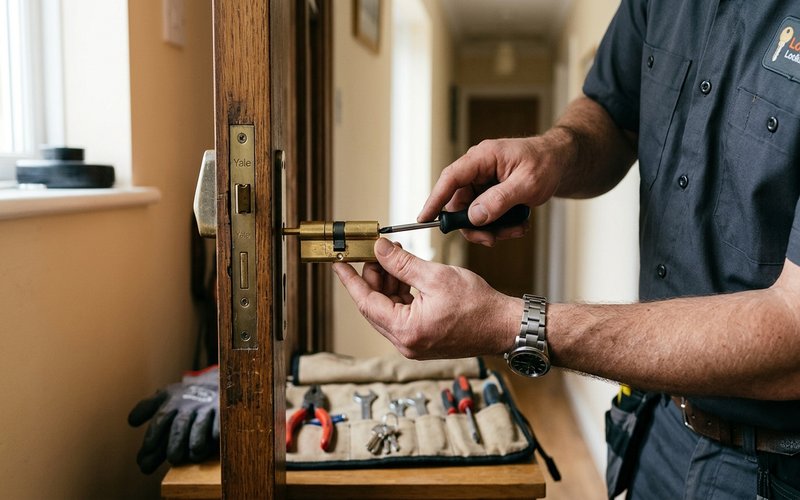
Don't forget to inspect smart locks and electronic entry systems during this process. Check battery levels, test backup key access, and verify that all programmed codes still work correctly. Fall is an excellent time to update or change access codes, especially if you've had contractors, houseguests, or service providers in your home during the summer months.
Upgrade to High-Security Locks
Fall represents an opportune moment to evaluate whether your current locks provide adequate protection for your Lombard home. Statistics consistently show that burglaries increase during fall and winter months when darkness arrives earlier and provides cover for criminal activity. If your locks are more than ten years old or you've never upgraded from builder-grade hardware, now is the time to consider high-security options.
High-security locks offer numerous advantages over standard residential locks. They feature pick-resistant and drill-resistant cylinders, reinforced strike plates, and keys that cannot be easily duplicated without proper authorization. Brands like Medeco, Mul-T-Lock, and ASSA ABLOY provide residential options that dramatically increase your home's security profile while maintaining aesthetic appeal.
Consider upgrading to Grade 1 deadbolts, which meet the highest residential security standards established by the American National Standards Institute (ANSI). These locks undergo rigorous testing for strength, durability, and resistance to forced entry. While they represent a larger investment than standard locks, the peace of mind and insurance benefits often justify the cost.
For maximum security, consider installing bump-proof locks that eliminate the vulnerability to lock bumping, a technique that allows intruders to open standard pin tumbler locks in seconds. Additionally, explore keyless entry systems that eliminate the risk of lost or stolen keys altogether. Many modern smart locks allow you to grant temporary access to visitors, monitor entry and exit times, and receive alerts when doors are opened—all from your smartphone.
Rekey Your Locks for the New Season
Fall cleaning isn't just for closets and gutters—it's also the perfect time to refresh your home's security by rekeying your locks. If you've lived in your home for several years without rekeying, you may be surprised by how many keys are floating around. Previous owners, former roommates, ex-partners, old contractors, house sitters, and dog walkers may all have copies of your house keys.
Rekeying involves altering the lock cylinder so that old keys no longer work, while new keys are provided to you. This process is significantly less expensive than replacing all your locks entirely and can typically be completed in a single service call. A professional locksmith can rekey multiple locks to work with the same key, providing convenience without sacrificing security.
Consider rekeying if you've recently moved into a new home, even if it's a new construction. Builders, real estate agents, inspectors, and various contractors often have access to keys during the construction and sales process. Additionally, if you've experienced a break-in, lost your keys, ended a relationship, or terminated an employee who had access to your home, rekeying should be done immediately.
For Lombard homeowners who rent out properties or have adult children who have moved out, fall is an ideal time to rekey and start fresh before the holiday season when you may have additional visitors. This proactive approach ensures you maintain complete control over who can access your home.
Lubricate and Winterize Lock Mechanisms
Cold Lombard winters can wreak havoc on unprotected lock mechanisms. Moisture from rain and snow can seep into locks, and when temperatures drop below freezing, this moisture can freeze inside the cylinder, making your locks difficult or impossible to operate. Proper lubrication and winterization now will prevent frustrating lockouts during the coldest months.
Start by cleaning your locks to remove dirt, dust, and old lubricant that may have accumulated over the warmer months. Use compressed air to blow out debris from the keyway and lock cylinder. Avoid using water or liquid cleaners inside the lock mechanism, as these can cause more problems than they solve.
Once clean, apply a dry lubricant specifically designed for locks. Graphite powder or PTFE-based (Teflon) lubricants work best because they don't attract dust and dirt like oil-based products. Insert the tube or applicator into the keyway and apply a small amount, then insert your key and turn it several times to distribute the lubricant throughout the mechanism. Wipe away any excess that emerges from the lock.
For exterior locks, consider installing lock covers or weather guards that shield the keyway from direct exposure to rain, snow, and ice. These inexpensive devices can dramatically extend the life of your locks and prevent weather-related malfunctions. Additionally, ensure that any overhang, awning, or porch roof adequately protects your entry doors from precipitation.
Apply lubricant to all moving parts of the lock, including the latch bolt, deadbolt, and door hinges. Squeaky hinges not only create noise but also indicate metal-on-metal contact that causes wear over time. A few drops of lubricant on hinge pins will keep doors swinging smoothly throughout the season.
Test and Replace Garage Door Locks
Your garage often serves as the primary entry point to your home during fall and winter months, making garage security critically important. Many homeowners overlook garage door locks, focusing instead on house door security while leaving this vulnerable access point inadequately protected. A comprehensive fall security check must include thorough inspection and testing of all garage door locks and opener systems.
Begin by testing your garage door opener's rolling code feature, which prevents thieves from capturing and reusing your remote signal. Most openers manufactured after 1993 include this feature, but older units may be vulnerable to code grabbing attacks. If your opener is more than 20 years old, consider upgrading to a modern unit with enhanced security features, including smartphone connectivity and real-time alerts.
Inspect the manual lock on your garage door, which serves as a backup when the power goes out. These locks often become stiff or corroded from disuse. Test the lock by engaging and disengaging it several times, and lubricate it using the same dry lubricant recommended for door locks. Ensure the lock bar extends fully into both guide tracks when engaged.
Check the emergency release mechanism on your automatic garage door opener. While this feature is essential for safety, it can also be exploited by intruders who use a coat hanger or similar tool to pull the release handle from outside the garage. Install a zip tie or dedicated security device that prevents the release from being triggered externally while still allowing you to disengage it from inside during emergencies.
For detached garages or those containing valuable equipment, consider installing deadbolts on entry doors leading from the garage to the outside. These provide an additional layer of security beyond the main garage door. Also, ensure windows in your garage have proper locks and consider adding security film or bars if they're easily accessible from ground level.
Evaluate Window Locks and Security
As you prepare your home for fall, don't neglect window security. Burglars often target windows as entry points because they're frequently left unlocked and are easier to breach than doors. With increased darkness during fall evenings, unsecured windows become even more attractive to criminals seeking easy access to homes.
Inspect every window in your home, including those on upper floors, in basements, and in the garage. Test each window lock to ensure it engages properly and holds the window firmly closed. Many standard window locks are inadequate and can be easily forced open. If you discover loose, broken, or missing locks, replace them immediately.
Consider upgrading to keyed window locks, which prevent windows from being opened even if the glass is broken and someone reaches through to manipulate the lock. These are particularly valuable for ground-floor windows and those hidden from street view by landscaping. Pin locks offer another excellent security upgrade, especially for double-hung and sliding windows.
For windows you never open, consider installing permanent security measures such as window security bars, grilles, or grates. While these may impact aesthetics, they provide unparalleled protection for particularly vulnerable windows. Alternatively, install security film that holds glass together if broken, making it significantly more difficult for intruders to gain entry.
Don't forget about basement windows, which are often overlooked but provide easy access for burglars. Install window well covers that prevent someone from hiding in the window well while attempting to break in. Ensure basement window locks are sturdy and consider adding additional security devices like bars or locks designed specifically for basement windows.
Install or Upgrade Outdoor Lighting
As daylight hours decrease throughout fall, adequate outdoor lighting becomes essential for both security and convenience. Well-planned exterior lighting eliminates hiding spots around your property and makes it clear that your home is occupied and protected. This section of your fall security checklist focuses on illuminating your property effectively.
Start by evaluating your current outdoor lighting setup. Walk around your property at night and identify dark areas where someone could approach your home unseen. Pay particular attention to entry doors, garage doors, side yards, and any paths leading to your home. These areas should be well-lit from dusk until dawn.
Consider installing motion-activated lights at all entry points and along pathways. These lights startle would-be intruders and alert you to activity around your home. Modern LED motion sensors are energy-efficient, long-lasting, and can be adjusted for sensitivity and duration. Position them high enough that they can't be easily tampered with or disabled.
Upgrade to smart outdoor lighting that can be controlled remotely via smartphone apps. These systems allow you to turn lights on and off from anywhere, create schedules that vary your lighting patterns to simulate occupancy when you're away, and receive alerts when motion is detected. Integration with other smart home security devices creates a comprehensive security ecosystem.
Don't overlook the importance of lighting near locks. Install lights directly above or beside entry doors so you can clearly see to insert your key, even on the darkest nights. This practical measure prevents fumbling with keys in the dark and makes it easier to notice if someone has tampered with your locks.
Check Door Frames and Strike Plates
Even the most sophisticated lock provides minimal security if installed in a weak door frame or with an inadequate strike plate. During your fall security inspection, carefully examine all door frames for signs of weakness, damage, or previous forced entry attempts. Many home burglaries succeed not because locks are picked or keys are stolen, but because doors are simply kicked in.
Inspect the area around each lock and deadbolt for cracks, splits, or gaps in the wood. Check that the door sits properly in the frame without excessive play or movement. A door that rattles or has visible gaps between the door and frame when closed can be easily forced open, regardless of lock quality.
Examine your strike plates—the metal plates attached to the door frame that receive the bolt from your lock. Standard strike plates installed by builders are typically held in place with short screws that only penetrate the door frame, not the wall studs behind it. These can be easily ripped out during a forced entry attempt.
Upgrade to heavy-duty strike plates that are at least 3-4 inches long and use 3-inch screws that extend through the frame and into the wall studs. This simple upgrade dramatically increases the force required to kick in a door. Box strike plates offer even greater security by encasing the entire bolt in a steel box that's deeply recessed into the frame.
For doors with glass panels near the lock, install double-cylinder deadbolts that require a key on both sides. This prevents an intruder from breaking the glass and reaching through to unlock the door from inside. However, ensure all household members know where keys are kept for emergency exit purposes.
Create a Master Key System
For homeowners with multiple properties, rental units, or complex security needs, fall is an excellent time to implement or review your master key system. A properly designed master key system provides convenience and flexibility while maintaining strict security protocols. This hierarchical key system allows different keys to open specific locks while a master key opens all locks in the system.
A basic master key system for a Lombard home might include separate keys for family members, housekeepers, pet sitters, and maintenance workers, with each key programmed to open only the locks necessary for that person's access needs. The homeowner retains a master key that opens everything, providing complete access while maintaining control.
Consult with a professional locksmith to design a system that matches your specific needs. They can create multiple levels of access, track who has which keys, and implement a key control program that prevents unauthorized duplication. Key control is essential for maintaining system security—without it, anyone can copy keys and undermine your entire security structure.
When implementing a master key system, establish a key tracking protocol that documents when keys are issued, to whom, and when they're returned. This is particularly important if you have service providers, contractors, or seasonal employees who need temporary access to your property. Consider color-coding keys or using tags that make it easy to identify which key opens which door.
Remember that master key systems require professional installation and programming. Attempting to create your own system or using hardware store locks can result in security vulnerabilities and operational problems. Investment in professional setup ensures reliability and maintains the security integrity of your entire system.
Secure Sliding Doors and Patio Entrances
Sliding glass doors and patio entrances present unique security challenges that require special attention during your fall locksmith checklist. These large glass expanses are popular targets for burglars because the locks are often inadequate and the glass can be lifted out of the track if not properly secured. As you prepare for fall, ensure these vulnerable entry points receive appropriate security upgrades.
Start by testing the existing lock on each sliding door. Most standard sliding door locks are merely latches that do little to prevent forced entry. They can often be defeated by simply lifting the door off its track or by forcing the lock with a screwdriver. Test your door by trying to lift it while it's closed—if it moves vertically at all, it's vulnerable.
Install auxiliary locks designed specifically for sliding doors. A pin lock or Charlie bar prevents the door from being opened even if the latch is defeated. These devices are inexpensive, easy to install, and highly effective. Position a Charlie bar in the door track when the door is closed, or install a pin lock that extends from the sliding door frame into the stationary frame.
For enhanced security, consider installing a multipoint locking system or keyed sliding door lock. These professional-grade locks engage at multiple points along the door frame and are significantly more resistant to forced entry than standard latches. Many can be keyed to match your other door locks for convenience.
Apply security film to sliding glass doors to prevent the glass from shattering easily. While this won't prevent all break-ins, it significantly increases the time and noise required to breach the door, which may deter opportunistic criminals. Alternatively, install security bars or grilles that swing open for normal use but can be locked across the door when you're away or sleeping.
Review and Update Security System Integration
Modern home security extends far beyond traditional locks and keys. As smart home technology becomes increasingly sophisticated, fall is the perfect time to review how your physical locks integrate with your overall security